

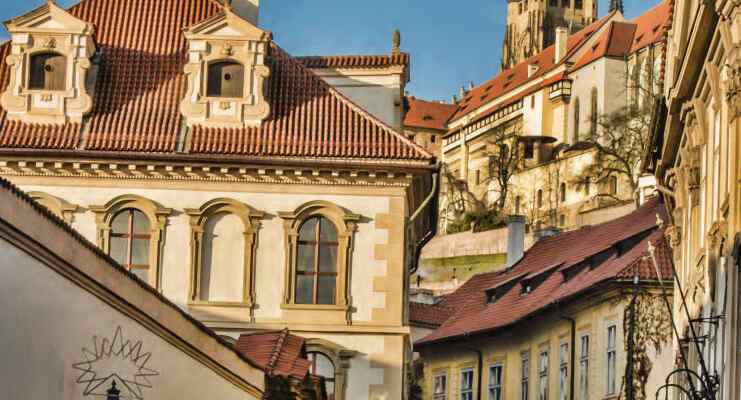


Since 1808, the Prague Conservatoire has been a place where exceptional talent, artistic excellence and a rich European cultural tradition come together. Generations of musicians, composers, singers and actors have passed through its doors, carrying its legacy to concert halls, opera houses and theatres in the Czech Republic and around the world.
Today, the Prague Conservatoire continues this tradition – inspiring young artists to find their own voice and preparing them for professional life on the stage and beyond.

Study
Students perform regularly in school concerts and productions, make recordings for radio and television, and participate in national and international competitions, where they frequently receive major awards. They also have opportunities to gain valuable international experience through tours and performances by the Prague Conservatoire’s orchestras and chamber ensembles throughout Europe and beyond.
Graduation
Upon successfully completing their final examinations, graduates are awarded a diploma certifying their professional qualification. Graduates of the Prague Conservatoire may enter professional careers as performers or teachers, or continue their education at higher-education institutions, including the Academy of Performing Arts in Prague.
Regular Studies
Full 6-years curriculum, free of charge, knowledge of the Czech language is required. For more information in Czech language, you can visit this page.
Applicants must pass rigorous entrance examinations, often conducted in several elimination rounds, and demonstrate both a high level of aptitude for their chosen field and broader musical ability, as well as the physical and psychological suitability required for their chosen discipline.


Paid Courses
Short-term, taught in a foreign language
Admission to special courses requires an examination in the applicant’s principal field of study. This may be completed by submitting an audio or video recording for assessment by the relevant department. Applicants are subsequently informed of the outcome of the admission process.
The academic year at the Prague Conservatoire runs from 1 September to 30 June. International applicants may also be admitted to special courses during the academic year; July and August are reserved for the summer holidays.
Applicants who have not previously been in contact with a member of the teaching staff will be referred to the head of the relevant department or to an appropriate specialist teacher. The content, scope and duration of the course can then be agreed individually. Special courses may range in duration from several months to several years. Tuition fees are payable in advance and are determined according to the scope and duration of the agreed programme of study.
Depending on their field of study and the nature of their individual programme, special-course students may have opportunities to participate in chamber ensembles, the choir or the symphony orchestra. International students may also take part in concerts organised by the Prague Conservatoire and, where appropriate, in end-of-year examinations.
Upon completion of a special course, students receive a certificate stating their field of study, the duration and scope of the course, the name of their principal teacher, and a brief assessment of their progress and achievement. Students who successfully complete the regular six-year programme of study receive the qualification and graduation documents prescribed for graduates of the Prague Conservatoire.
The Prague Conservatoire does not have its own student accommodation. However, the institution may, where possible, provide students with assistance in finding suitable accommodation and catering options.
For more information, contact Ms. Emilie Kratochvilova: kratochvilova@prgcons.cz

Archives & Library
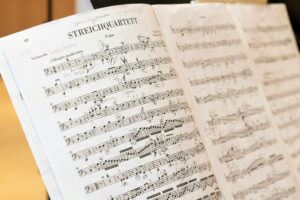
The Library and Archive of the Prague Conservatoire rank among the richest collections of their kind in Central Europe. They are particularly distinguished by their extensive holdings of nineteenth-century materials, while also preserving a number of unique items dating from earlier periods.
The activities of this highly specialised library range from acquiring, cataloguing and making music publications and other materials available in both printed and electronic form to providing research services and ensuring the long-term preservation of its collections. Its scholarly work focuses particularly on the cataloguing of Czech and international music holdings and their gradual incorporation into electronic databases, making these resources increasingly accessible to researchers, musicians and the general public.
The Library holds an extensive collection of sheet music available for loan not only to students and teachers of the Prague Conservatoire but also to the wider musical community. Its historical music collections are increasingly consulted by researchers from the Czech Republic and abroad. The holdings include orchestral scores, piano reductions of operas, choral music, instrumental methods and tutors, études, chamber music and a wide range of other materials.
The Library also maintains an extensive collection of books on music, ranging from textbooks on harmony and counterpoint to publications on musical instruments, music history and reference works. The collection encompasses both recent publications and historical volumes dating back to the nineteenth century, in Czech as well as numerous other languages.
The Library and Archive preserve an important collection of historical manuscripts, autograph manuscripts and printed music representing a broad range of genres. These include pedagogical works, symphonic and chamber music, operas, sacred music and works by more recent composers. The collections also contain a substantial body of sound recordings in a variety of formats, including vinyl records, magnetic tapes, cassettes and CDs.
Of particular significance is the Archive’s collection of correspondence, which includes letters by and relating to many prominent figures in Czech and European musical history, among them Antonín Dvořák, Leoš Janáček, the Kubelík family, Richard Wagner, Franz Liszt and Louis Spohr.
The library collections are being processed to gradually transfer the records into an internet-based electronic system. As a result of this, users can search the library collections via the internet at On-line catalog Tritius.
Users of the Prague Conservatory Library might also be interested in being able to view rare historical documents online. With the aid of the Memoria Project (www.manuscriptorium.com) in the Manuscriptorium database, they can view a digitized version of the rare manuscript of the score and the piano transcript of W.A. Mozart’s opera Don Giovanni, which belongs to the collections of the library.
Contacts
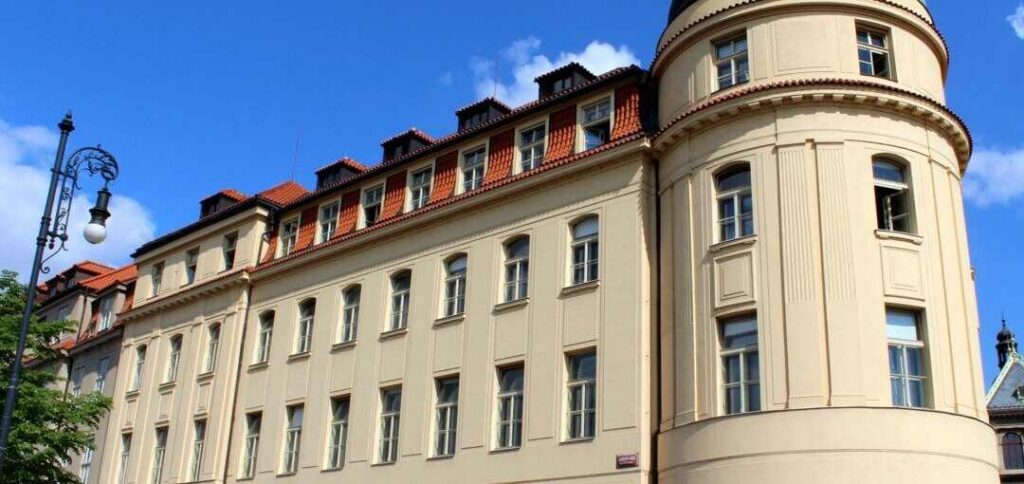
Main Building
Na Rejdišti 1, 110 00 Praha 1
Phone: +420222321833 or +420222327206
E-mail: podatelna@prgcons.cz
Directions
Metro A line: Staroměstská stop
Bus no. 194, 207: Staroměstská stop
Tram no. 2, 17, 18: Staroměstská stop
Pálffy Palace
Valdštejnská 14, 118 00 Praha 1
Phone: +420257535199
Library: +420257535432
E-mail: archiv@prgcons.cz
Directions
Metro A line: Malostranská stop
Bus no. 194: Valdštejnské náměstí stop
Tram no. 2, 12, 15, 18, 20, 22, 23: Malostranská stop


